
You took time off.
Maybe it was for your health. Maybe for your family. Maybe because you lost your job during a difficult time and the search took longer than expected. Maybe you chose to study, travel, start something, or simply recover from burnout.
And now, staring at your resume, you see the gap — and wonder if it will cost you every interview you apply for.
Here is the truth: career gaps are not the professional red flags they once were.
India's hiring culture has evolved. The COVID-19 pandemic alone created career gaps for millions of professionals — and recruiters know it. The rise of caregiving awareness, mental health conversations, and non-linear career paths has further normalized time away from full-time work.
What matters is not that you have a gap. What matters is how you present it — on your resume, in your cover letter, and in the interview room.
This guide gives you everything you need to do that professionally, confidently, and honestly.
To explain a career gap on your resume professionally: be honest but brief, frame the gap as intentional or productive wherever possible, mention anything you did during the gap (certifications, freelancing, caregiving, health recovery, or personal development), and focus forward — on why you are ready and excited to return. In the interview, give a 2–3 sentence explanation and immediately pivot to what you bring today. Gaps are common, expected, and increasingly accepted by Indian employers in 2026.
How Common Are Career Gaps in India?
More common than most people assume:
- Millions of Indian women leave the workforce for marriage, maternity, or caregiving — often for 1–5 years
- The pandemic created 12–24 month gaps for thousands of otherwise high-performing professionals
- Health issues, mental health recoveries, and family emergencies create gaps across every demographic
- Many professionals voluntarily take breaks to upskill, study, or explore entrepreneurship
- Extended job searches after layoffs or company closures can themselves create 6–18 month gaps
Recruiter reality in 2026: Most experienced recruiters in India have seen hundreds of resumes with gaps. They are not automatically alarmed by them. What they are looking for is: does this person understand what happened, are they honest about it, and are they ready to work now?
If your answer to all three is yes — the gap is unlikely to cost you the job.
Types of Career Gaps and How to Frame Each One
Different gaps require different framing. Here is how to approach the most common ones:
Gap Type 1: Maternity / Childcare / Family Caregiving
Who it affects most: Women returning to work after maternity leave, or after caring for elderly parents, sick family members, or young children.
The honest truth: This is the most common career gap among Indian women — and it is also the most unfairly penalized one. However, India's corporate culture is slowly shifting, with an increasing number of companies actively supporting returnship programs.
How to frame it:
On the resume:
Career Break — Family Caregiving
2022 – 2024

Took a planned career break to care for [young children / an elderly parent / family member].
During this period, maintained professional skills through [online courses / part-time freelancing / reading / certifications].
In the interview: "I took two years away from full-time work to care for my young children. It was a deliberate decision and one I am at peace with. During that time, I stayed connected to my field through [online courses / freelance projects / professional reading]. I am now fully ready to return — with the same skills I had before, refreshed energy, and a clearer sense of what I want to build professionally."
Key principle: Never apologize for caregiving. Frame it as a conscious choice and demonstrate that you stayed professionally connected.
Gap Type 2: Health or Mental Health Recovery
Who it affects: Anyone who took time off due to illness, surgery, mental health treatment, burnout, or recovery.
How to frame it:
On the resume:
Career Break — Personal Health
2023 – 2024

Took a medical leave of absence to address a health matter. Now fully recovered and ready to return to full-time work.
In the interview: "I took about a year off to address a health matter. I am now fully recovered and my doctor has cleared me for full-time work. I am genuinely excited to get back — I have used the time to [stay current / complete a certification / do some freelance projects] and I am ready to contribute from day one."
What NOT to say:
- You do not owe any employer specific medical information
- Never go into unnecessary detail about diagnosis, treatment, or prognosis
- Do not over-explain — a brief, confident statement is more reassuring than a long justification
What you are legally required to disclose: In most Indian employment contexts, you are not required to disclose the nature of a health condition unless it directly affects your ability to perform the specific role.
Gap Type 3: Job Loss / Layoff / Long Job Search
Who it affects: Professionals laid off during company restructuring, startup shutdowns, or industry downturns — including COVID-era layoffs.
How to frame it:
On the resume:
Career Break — Following Company Restructuring
March 2023 – October 2023

Company underwent significant restructuring that resulted in team elimination. Used the period to complete [Google Data Analytics Certificate / HubSpot Marketing Certification], work on [personal project / freelance assignments], and conduct a deliberate job search aligned with long-term career goals.
In the interview: "My previous company went through a round of restructuring and my entire team was let go. I want to be upfront about that — it had nothing to do with my performance and I have references who can confirm that. I used the 8 months to [complete certifications / work on personal projects / do some consulting] and I have been very deliberate about what I apply for next. This role is one I have pursued with real intention."
Key principle: Never be embarrassed about a layoff. It is common, it is often entirely outside your control, and it tells the recruiter nothing negative about your capabilities. Say it directly and move forward.
Gap Type 4: Higher Education or Upskilling
Who it affects: Professionals who took time off to pursue an MBA, a postgraduate degree, a certification program, or intensive skill development.
How to frame it:
On the resume:
Full-Time MBA — [Institution Name]
2022 – 2024

Pursued full-time postgraduate education in [specialization]. Graduated with [distinction / CGPA / ranking]. Key courses: [2–3 relevant ones].
This is the easiest gap to explain — because it is not really a gap. It is a career investment. List the education clearly in your Education section and it essentially speaks for itself.
Gap Type 5: Entrepreneurship or Freelancing That Did Not Scale
Who it affects: Professionals who left employment to start a business, freelance, or consult — and are now returning to full-time work.
How to frame it:
On the resume:
Founder / Independent Consultant — [Your Field]
2022 – 2024

Started and operated an independent [marketing consultancy / tech venture / content business / e-commerce operation]. Developed [specific skills: client management, P&L responsibility, market research, product development]. Gained [specific achievement]. Currently seeking full-time role to apply entrepreneurial experience within an established organization.
In the interview: "After several years in employment, I wanted to test myself by building something of my own. I learned an enormous amount — about selling, managing clients, building systems, and operating under uncertainty. The experience gave me skills I could not have developed any other way. I am now at a stage where I want to apply those skills within a larger organization that can give them more scale and impact."
Key principle: Never present entrepreneurship as a failure. Frame it as a deliberate experiment with real learnings — regardless of the financial outcome.
Gap Type 6: Personal Reasons / Travel / Sabbatical
Who it affects: Professionals who took a break for personal development, travel, volunteering, or simply rest after an intense career period.
How to frame it:
On the resume:
Sabbatical — Personal Development
2023 – 2024

Took a planned sabbatical to [travel / pursue personal interests / volunteer / rest and reflect after an intensive work period]. Maintained professional development through [reading / online courses / volunteer projects].
In the interview: "I had been working at a very high intensity for 7 years without a significant break. I made a deliberate decision to take a sabbatical — to travel, read, and reconnect with what I want from the next phase of my career. I came back with significantly more clarity about the direction I want to take — which is directly what led me to apply for this role."
Key principle: Confidence in your decision. A professional who took a deliberate break signals self-awareness — not irresponsibility. Many senior professionals take sabbaticals. Own it.
How to Show a Career Gap on Your Resume
There are three main approaches — choose based on the nature and length of your gap:
Approach 1: List the Gap as a Resume Entry (Recommended for gaps over 6 months)
Add a dedicated entry in your work experience section — treating the gap as a period you can describe:
WORK EXPERIENCE

Career Break — Caregiving / Health / Freelancing / Education
[Month Year] – [Month Year]

[2–3 bullet points describing what you did during this period — courses, certifications, freelance work, volunteering, or a brief honest description of the reason]
This approach is more transparent and more positively received than a gap that the recruiter notices but you have not addressed.
Approach 2: Use a Functional or Hybrid Resume Format
If your gap is recent and significant — consider switching from a reverse-chronological format (which emphasizes the gap immediately) to a hybrid format that leads with your skills and achievements, then presents your work history.
This does not hide the gap — it just ensures the recruiter sees your value first.
Approach 3: Address It Directly in Your Professional Summary
Add one line to your professional summary that proactively acknowledges the break:
"Returning to full-time marketing work after a 2-year caregiving break — bringing 6 years of digital marketing experience, refreshed skills through Google and HubSpot certifications completed in 2024, and genuine excitement to contribute."
This removes the gap's mystery — and immediately frames it as a chapter, not a flaw.
The Best Things to Do During a Career Gap (That Help You Re-Enter)
If you are currently in a gap — or about to take one — here is what to do to make re-entry easier:
1. Complete relevant certifications Free certifications from Google, Microsoft, HubSpot, and NPTEL are the fastest way to show employers that your skills are current. A Google Data Analytics or Microsoft Power BI certification earned during a gap completely changes the narrative from "time off" to "time invested."
Complete and add certifications to your LinkedIn profile and resume immediately. They are dated — which shows exactly when you earned them.
2. Do freelance or consulting work Even 2–3 small freelance projects during a gap demonstrate professional engagement. A few content writing assignments, one social media management client, or even a pro bono project for a local NGO creates real, datable experience you can list.
3. Stay professionally connected on LinkedIn Post once a week. Comment on industry content. Share an article about your field. This maintains your professional visibility and sends a signal that you never disconnected from your industry — even during a personal break.
4. Attend webinars, virtual conferences, and industry events Free online events are everywhere. Attending — and mentioning specific events in your resume or interview — shows genuine field engagement.
5. Read and stay current Follow industry newsletters, blogs, and thought leaders. Being able to reference recent developments in your field during an interview is powerful proof that your knowledge is current — regardless of the employment gap.
How to Answer "Tell Me About Your Career Gap" in an Interview
This question will come. Prepare a clear, confident 2–3 sentence answer.
The formula:
Sentence 1: What happened / why the gap occurred (honest and brief) Sentence 2: What you did during the gap (productive framing) Sentence 3: Why you are ready now (forward-focused energy)
Then stop. Do not over-explain. Confidence and brevity read as honesty. Long justifications read as defensiveness.
Sample Answer: Career gap for family caregiving
"I took two years away from full-time work to care for my young children — a decision I made deliberately and stand behind. During that time I completed Google's Data Analytics Certificate and did some part-time freelance analysis work to stay sharp. I am now fully ready to return and genuinely excited about this specific role."
Sample Answer: Career gap after layoff
"My previous company went through a significant restructuring — my team was eliminated as part of it. I used the seven months to complete two certifications, work on a personal data project, and be very deliberate about where I apply next. This role caught my attention specifically because [specific reason] — and that is why I am here today."
Sample Answer: Career gap for health reasons
"I took about a year off to address a personal health matter. I am fully recovered now and my doctor has cleared me for full-time work. I stayed connected to my field through online learning and some part-time consulting during that period. I am genuinely ready to get back — with more appreciation for meaningful work than I had before."
Sample Answer: Sabbatical / personal break
"After eight years of continuous work, I chose to take a sabbatical. I used the time to travel, complete two courses I had been postponing, and gain clarity on the direction I want to take next. That clarity directly led me to apply here — this role is a deliberate next step, not a default one."
What Indian Recruiters Actually Think About Career Gaps
To remove the fear — here is the reality of how experienced Indian recruiters approach career gaps in 2026:
"A 1–2 year gap does not concern me if the person is honest about it." Most recruiters have seen enough career gaps to know they do not indicate incompetence. Honesty and confidence matter far more.
"What I look for is: did anything happen during the gap? Even a free course?" Demonstrating that the gap was not entirely passive — even one certification — is reassuring. It shows professional identity remained intact.
"I am more concerned about someone who has been employed but has not grown." An employed candidate who has done the same thing for 5 years with no growth often concerns recruiters more than a career-gap candidate who used their time intentionally.
"The candidate's energy and confidence in the interview matters more than the gap." How you talk about your gap matters as much as the gap itself. Defensive, over-explained, or apologetic answers raise more concerns than the gap. Confident, brief, honest answers almost always close the issue.
Career Gap Resume: Dos and Don'ts
| DO | DON'T |
|---|---|
| Be honest — gaps discovered later damage trust far more | Lie or falsify employment dates to cover the gap |
| Frame the gap briefly and confidently | Over-explain or justify excessively |
| Show what you did during the gap | Leave the gap completely blank without any mention |
| Complete at least one certification before applying | Apply without refreshing any skills first |
| Address the gap proactively in your summary or cover letter | Wait for the recruiter to ask and seem caught off guard |
| Focus on readiness and forward energy | Apologize for the gap or seem ashamed of it |
| Research companies that have returnship or re-entry programs | Limit your search to companies without supportive policies |
| Use a functional or hybrid resume if the gap is prominent | Use a strict chronological format that starts with the gap |
Build a Resume That Handles Your Gap Professionally
The way your career gap appears on your resume — or does not appear — significantly affects how recruiters perceive it.
A poorly formatted resume with an obvious unexplained gap creates questions. A professionally structured resume that proactively addresses the gap, highlights your skills and certifications, and leads with your strongest achievements changes the entire narrative.
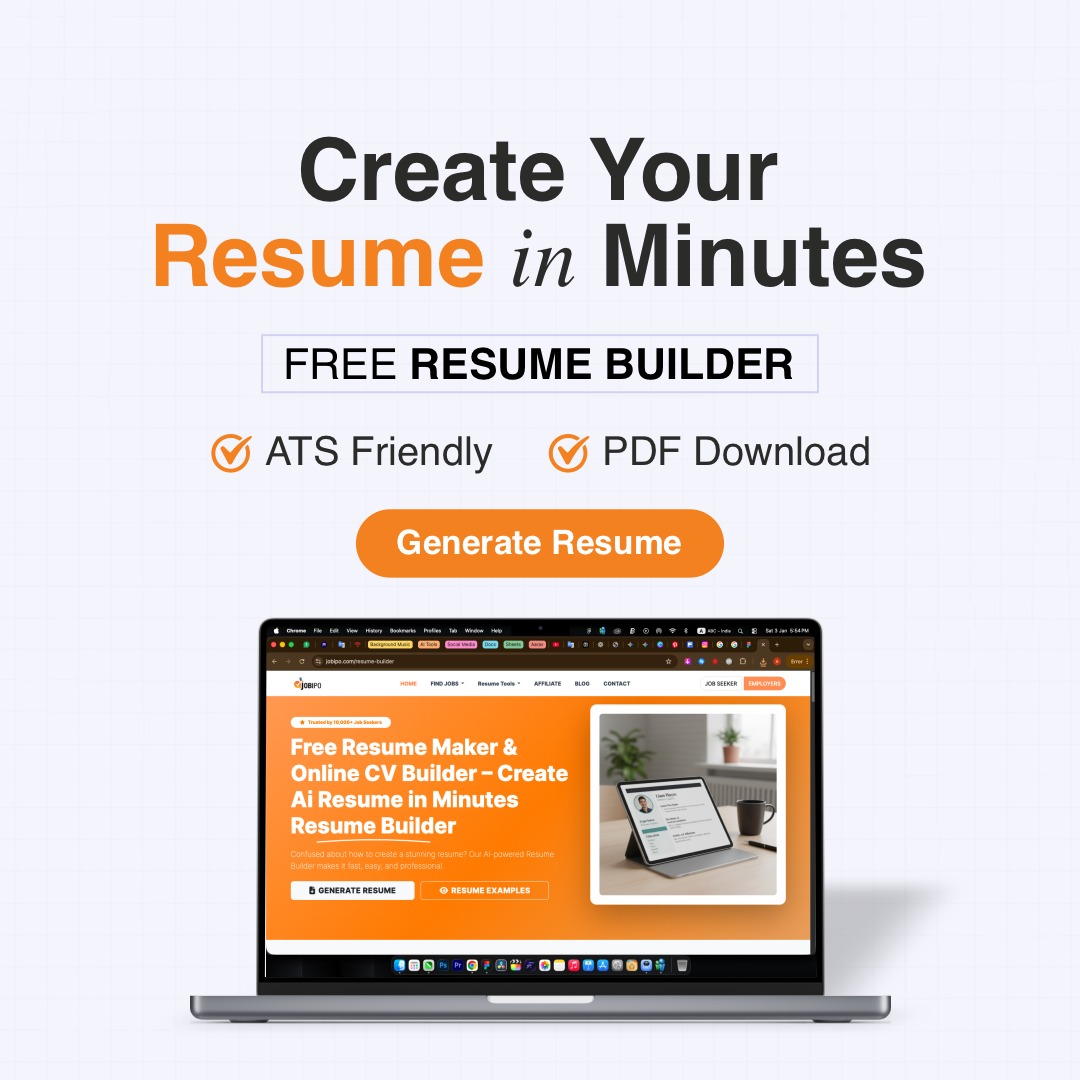
Jobipo's Free AI Resume Builder at jobipo.com/resume-builder helps you present your career gap professionally:
- Career break entry formatter — list your gap period as a professional entry with the right language
- Professional summary generator — AI writes a summary that frames your return confidently and positions your current readiness
- Skills and certifications section — prominently highlights skills developed or maintained during your break
- ATS Score Checker — ensures your resume matches the job description before you apply, gap or no gap
- Free PDF download — instant, no signup, ready to apply today
Your gap is part of your story. Tell it well.
Final Thoughts
A career gap is not the end of your story. It is a chapter in it.
Every professional who has taken time away — for family, health, learning, or life — and returned to work confidently has done so by doing one thing: owning their story instead of hiding from it.
Recruiters are not looking for perfect, uninterrupted career trajectories. They are looking for capable, honest, self-aware professionals who are ready to contribute.
Your complete action plan:
- Decide how to frame your gap — caregiving, health, education, layoff, sabbatical
- Add the gap as a professional entry on your resume using the templates above
- Complete at least one relevant certification before applying
- Write a 2–3 sentence interview answer — practice it out loud until it sounds natural
- Add a proactive line to your cover letter that addresses the gap confidently
- Build your updated resume on Jobipo's Free AI Resume Builder — gaps included, professionally framed
- Apply on Jobipo.com — search for returnship-friendly and fresher-welcoming roles
Your career gap does not define your career. What you do next does.









Comments