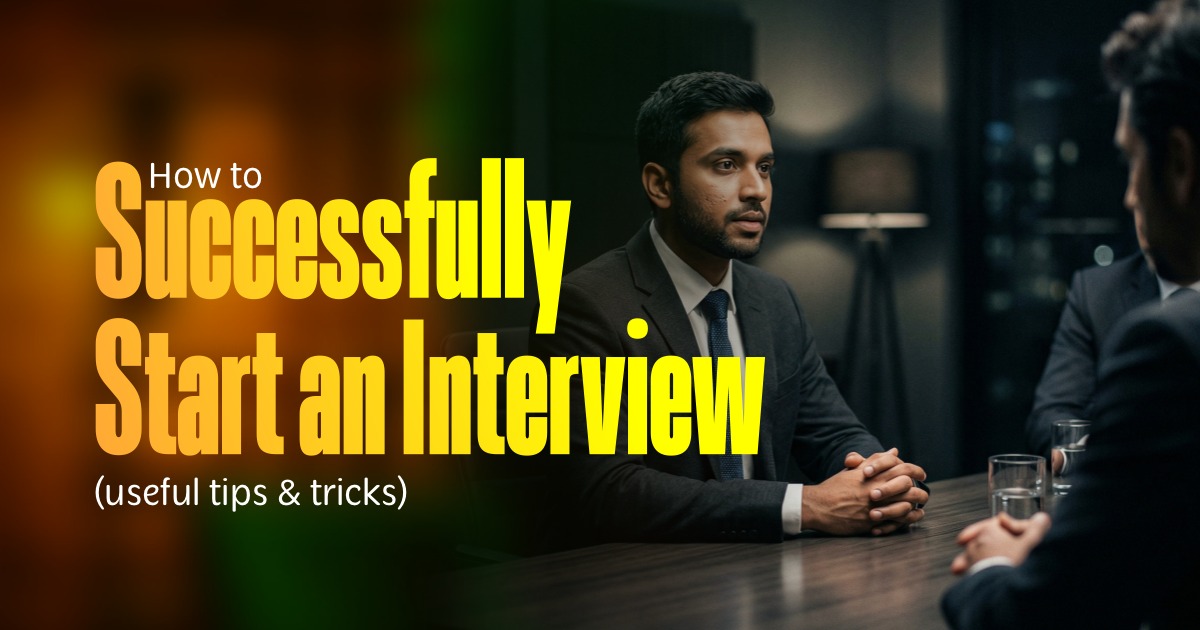
The first job interview is critical to success in your career and could lead to your dream job, or be the reason for stress in your life. The first question of an interview does not start the interview process. The interview process actually starts when you walk into the room.
Most candidates spend all their time preparing answers to difficult questions without giving any thought to the most important thing they can do to prepare for an interview — create a great first impression. When the candidate walks into the room, their energy and body language help create a "first impression" that can be remembered by the interviewer long after the candidate has gone.
According to studies, the interviewer will have formed an opinion about the candidate by the time they have been in the same room with the candidate for seven minutes. During that time frame, the candidate's energy, body language, and greeting make up the majority of the first impressions the interviewer will have.
Whether you are a new graduate interviewing for your first job or an experienced professional changing jobs, these tips will help you feel confident as you walk through the door of your interview and leave with a job offer.
1. Research the Company Before Your Interview
Go to the company's website and review the following:
- their history, including their mission and vision statements, as well as any recent news
- all the products they sell, along with their services (if any)
- try to learn the name of your interviewer(s) in advance if you can
2. Wear the Right Clothes and Appearance
- Always wear appropriate clothing that is neat and professional
- Make sure to iron your clothes the night before you need them.
- Accessories should be kept simple and minimal.
- Your shoes should be clean and polished.
3. Arrive Early and NOT Late
Arrive at least 10 to 15 minutes early.
- If the location of the interview is new, check it out at least one day in advance.
- Be sure to allow for travel time and time to find parking.
- Make sure that you have the interviewer's telephone number stored on your cell phone.
4. Control Your Body Language
- Stand tall, and keep back and head high.
- Use a strong and assured handshake.
- Ensure you maintain natural eye contact during the interaction.
- Sit erectly and do not fidget.
5. How To Properly Greet The Interviewer
- If you know the interviewer's name, use it.
- Say, "Hello. It is great to meet you".
- Only sit when the interviewer offers you a seat.
- Be professional, courteous and sincere.
6. Prepare well to answer the first question
“Tell me about you”.
When structuring your answer, consider the following:
- Present: Who am I today?
- Past: What are some of the key experiences and accomplishments from my past?
- Future: What am I hoping to achieve in this position?
- Aim for a duration of 90 seconds to 2 minutes.
7. Demonstrate enthusiasm and genuine interest in the company.
- Explain what excites you about the company.
- Cite something they do that you admire.
- Ask one thoughtful question early in the interview.
- Remain positive and enthusiastic throughout.
8. Controlling Your Nerves Like A Pro
Before entering:
- Take slow, deep breaths.
- Pause for 2 to 3 seconds before giving an answer, if necessary.
- Remind yourself that the interviewer wants you to succeed.
- Prepare adequately, so you will be naturally confident.
9. Bringing The Right Documentation
Always carry the following items:
- Print a copy of your resume in multiple copies.
- Any certificates or proof of education, along with identification.
- A neat folder or binder to keep documents organised.
- A pad of paper & a pen to take notes.
10. Make Your Last Impression Strong
- Thank the interviewer for taking the time up front
- Ask an intelligent question, such as "What does success in this position look like?"
- Show you were there to add value, not just to find one (a job)
- Create a positive and strong lasting perception.
11. Research Frequently Asked Interview Questions Beforehand
- Be prepared to respond to commonly asked interview questions, such as: “What are your strengths and weaknesses?”
- Practice answering the interview question “Where do you think you will be in five years?”
- Practice has to include two to three examples of things you’ve done well (past accomplishments).
- You may also conduct a mock interview with someone (a friend) or in front of a mirror to help you prepare for the actual interview!
12. Turn Your Phone Off When You Arrive
- When you get to the interview, put your phone on silent or turn it off.
- It is very unprofessional to have your cell phone ring during an interview. Do not use your phone to check for messages or to scroll through while you are waiting for the interview to start.
- You should be paying complete attention and be ready to give them your total undivided attention from the beginning.
13. Always be truthful in interviews
- You should always represent your true qualifications on your resume.
- If you do not have experience with something, say that "I am still learning this area"
- Recruiters have years of interview experience; they will easily see through fake responses.
- Let their honesty establish a foundation of confidence in them and your future career.
14. Use confident and encouraging words when speaking
- Avoid using negative phrases such as "I cannot," "I have no idea," and "I have never done," etc.
- Try to be positive by using phrases such as "I am really excited about learning/trying new things".
- Talk to them with clarity and confidence, use an appropriate tone and a slower speed than how fast you would normally speak.
- Do not use any seek words or use very informal words and phrases when communicating with others.
Final Thoughts
Getting off to a good start in an interview will allow you to develop as an individual who has confidence or demonstrates genuine enthusiasm. It may not be that the candidates with the best qualifications win, but rather the candidates with good communication skills, confidence and posters that show authentic excitement.





Comments