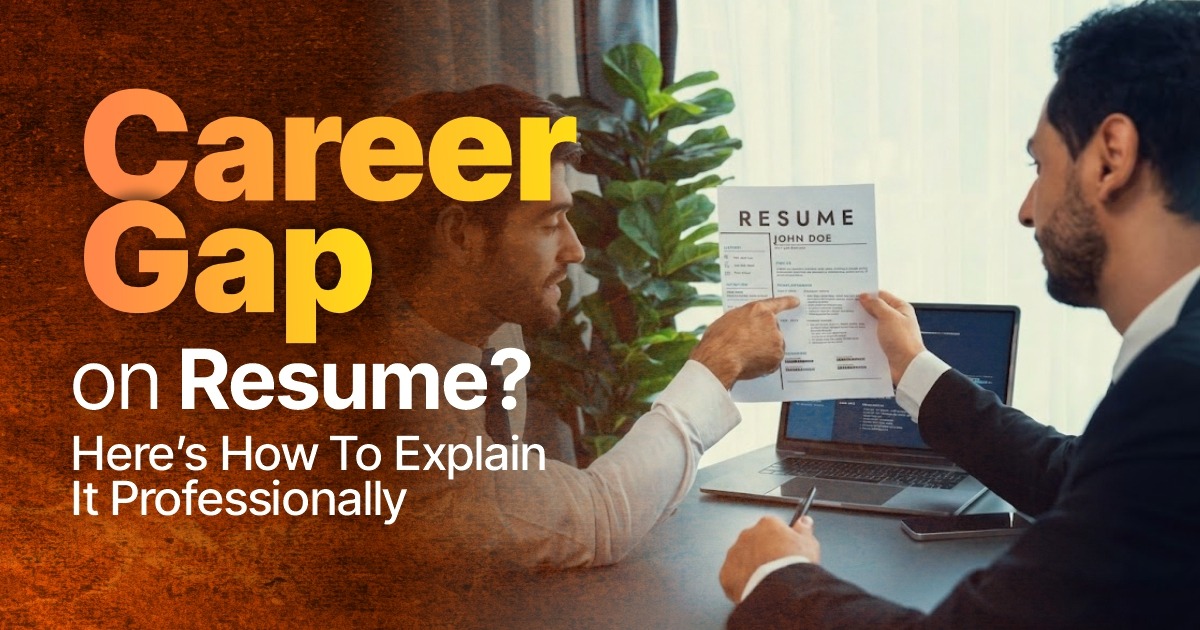
Sometimes, a career gap of a few months or more is necessary. These breaks between jobs have become more common and more accepted today. When interviewing candidates, recruiters review their employment background and may enquire about any gaps. Whether you took time off to care for a family member, pursue further education, or navigate a career transition, having employment gaps on your resume shouldn’t deter you from pursuing your dream role.
There is a candidate who doesn’t know how to mention or clarify the career gap on a resume. Career gap explanation for interview are no longer a concern. Today, almost 62% of workers have career gaps, and thus, career gaps in a resume have become acceptable and are nothing to worry about. Career development, rather than career stability, matters today.
Address a career gap professionally by explaining it briefly, honestly, and confidently, focusing on what you learned or accomplished during that time and why you are ready to work now. Recruiters value clarity, skills, and relevance more than a continuous timeline.
In this article, you will learn about the reasons of carrer gap and how to mention it in a resume positively, what a career gap actually is, how to explain a career gap in a resume and also give sample answers for your better understanding.
Key takeaways :
- Career gaps are common and accepted when explained honestly and confidently.
- Focus on skills, learning, or experience gained during the gap period.
- Use positive and professional language to show growth, not weakness.
- Align your explanation with the job role to prove readiness and value.
What is a career gap on a resume?
A career gap on a resume means any time (weeks, months, or years) when you were not working in a formal job. This can happen for many reasons, such as studying, taking care of family, travelling, health issues, or job loss. Employers notice these gaps to understand your career journey. So, it is better to explain them clearly and positively. You can mention what you did during that time, like learning new skills, doing online courses, freelancing, or improving yourself. This shows that you stayed active and are ready to work again, instead of trying to hide the gap.
What are the common reasons for career gaps?
Career gaps are common and usually not a problem if you positively explain them. If you show that you learned something new or are ready to start working again, employers see it neutrally.
Here are the common reasons for career gaps.
Family and caregiving
Some people take a break to take care of children, look after sick family members, or support their spouse’s job transfer.
Health
A gap can happen because of recovery from illness, injury, or to take rest for mental health, such as stress or burnout.
Education and training
Many people pause their job or study further, complete a degree, earn certificates, or learn new skills to grow their career.
Job search
After leaving a job or being laid off, some time is spent searching for the right job that matches skills and goals.
Company changes
Sometimes jobs are lost because the company downsizes, closes, or changes structure. This is not the employee’s fault.
Career change
A gap may happen when someone switches to a new field. During this time, they may do freelance work, internships, or start a small business.
Personal growth
Some people take time off to travel, take a break, or work on self-development to gain new perspectives and energy.
Relocation
Moving to a new city or country can cause a short break while settling down and finding a new job.
How to mention a career gap in a resume or interview
There are some tips that help to handle the interview question about your employment gap.
On your resume and cover letter
Be direct and brief
Clearly mention the gap in your resume. You can write it as “career break (2022-2024)” or add a section called “professional development”.
Explain productively
Briefly explain what you did during the gap. for examples
- Completed a digital marketing course.
- Did volunteer work with an organisation.
- Worked as a freelancer or consultant.
Focus on skills
Highlight the skills you gained or improved, such as time management, adaptability, teamwork, project handling or learning new software.
Valid reasons
Keep the reason short and honest, like health recovery, family responsibilities, further studies or moving to a new place.
In your interview
Address it clearly
Talk about the career gap yourself. Don’t wait for the interviewer to ask, but be short and confident, no need to share too many personal details.
Turn it into a positive
Give a brief reason for the break (for example, family or health), then explain what you learned or achieved during that time
Show you are ready
Clearly say that you are now fully ready and excited to start full-time work again.
Connect it to the job
Explain how the experience or skills you gained during the gap are useful for the job you are applying for.
Be honest and positive
Present the gap as a time of learning and growth, not wasted time. This shows your seriousness and commitment to your career.
Sample answers for How to Explain a Career Gap Professionally
Here are professional sample answers you can use to explain a career gap. They are clear, positive, and confident - you can adjust them to match your situation.
Family reasons
I stepped away from work for a short-period to handle important family responsibilities. This phase improved my planning, patience, and responsibility skills, and I’m now ready to restart my professional journey.
Health break
I took a planned break to focus on my health and overall well-being. After full recovery, I’m energised, focused, and prepared to take on new professional challenges.
Learning and upskilling
I used this to invest in learning by completing skill-based training and certifications. These efforts have strengthened my expertise and made me more confident in my abilities.
After a job loss
My previous position ended due to organisational changes. I used the time productively to improve my skills and carefully choose my next role to ensure long-term growth.
Switching career direction
I took time to realign my career goals and develop skills in a new field. This phase helped me gain clarity, and I’m now committed to growing in this role.
Personal development
I took a short career pause for personal development. It helped me gain better focus, adaptability, and a stronger work mindset.
Relocation
I had to take a break due to relocation. After sitting in, I concentrated on preparing myself professionally and am now ready for a full-time opportunity.
Strong closing line
I consider this break a valuable phase that prepared me to return with more clarity, skills and commitment.
FAQs
Q1. Is it bad if there is a gap in my work career?
No. They place far more emphasis on strengths, abilities, and preparedness for the job than on deficiencies.
Q2. Must I point out a gap in my work history on my resume?
Yes, you should briefly mention it with a positive and honest statement.
Q3. How can the career gap in my resume be explained?
Emphasise learning, freelancing, upskilling, or personal development during this period.
Q4. Where should I describe my career gap?
In the experience section or in a brief interview process.
Q5. Can freshers have career gaps?
They can, yes, and they offer internships, courses, or skill development for that.







Comments