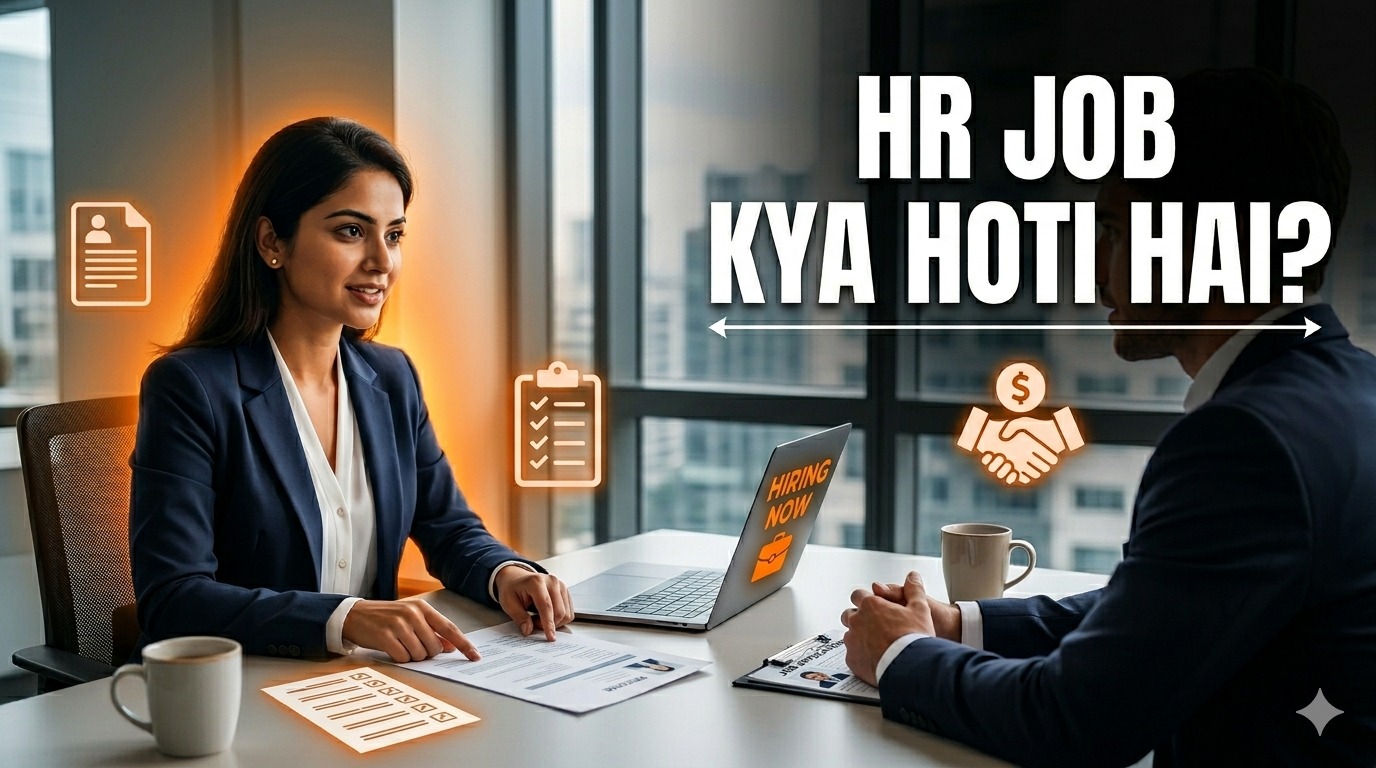
One thing is common in every company from a five-person startup to a multinational with thousands of employees. They all need someone to manage their people.
Who handles the hiring when a company needs a new team member? Who makes sure employees are paid correctly and on time? Who steps in when there is a conflict and argument between two colleagues? Who makes sure a new joiner feels welcomed and understands how things work?
That is the HR department. And the person doing all of this is an HR professional.
HR stands for Human Resources and it is one of the most consistently in-demand career fields in India. Every growing company needs HR support which means the job market for HR professionals is wide, stable, and full of opportunity - whether you are a fresh graduate looking for your first role or someone looking to switch careers into people management.
In this guide you will learn about exactly what an HR job involves, what types of HR roles exist, what skills you need, what salary to expect including specifics for Jaipur and how to actually land your first HR job smoothly.
HR Job Kya Hoti Hai - Simple Explanation
Let us start from the very beginning.
A company is made up of people. And managing those people, finding the right ones, bringing them in, keeping them happy, paying them correctly, helping them grow and making sure the work environment stays healthy is an enormous responsibility. That is what HR did.
The HR department is the bridge between a company's management and its employees. They represent the company when hiring new people and they represent employees when issues need to be escalated to management.
Here is a real-life example. Imagine a logistics company in Jaipur that is growing fast. They need to hire 20 new delivery coordinators over the next two months. The HR executive posts job listings, screens hundreds of applications, shortlists the right candidates, schedules interviews, coordinates with the hiring manager, sends offer letters and then onboards the selected people - explains the company policies, sets up their accounts and makes sure their first week goes smoothly. All of that is HR work.
And that is just one part of the job. HR also handles attendance tracking, payroll, employee grievances, performance review processes and sometimes even training programs.
It is a role that is always busy, always relevant and deeply connected to how a company actually functions day to day.
Types of HR Jobs in India
HR is not a single job title. It is an entire function with several specialisations. Here is a breakdown of the most common HR roles you will encounter.
- HR Recruiter focuses entirely on finding and hiring talent. They write job descriptions, post them on job portals, screen resumes, conduct initial phone interviews, coordinate with hiring managers and manage the offer and joining process. If you enjoy meeting new people and have a sharp eye for spotting good candidates this is a very natural fit.
- HR Executive is a more general role but important for any company that handles the day-to-day operations of the HR function like attendance, leave management, basic employee queries, documentation and coordination. Most freshers start here and then specialise over time.
- HR Manager is a senior role that involves building and leading an HR team, making strategic hiring decisions, designing company policies, handling complex employee relations issues and working directly with senior leadership. This role typically requires several years of experience.
- Payroll HR specialises in salary processing - calculating earnings, managing deductions, ensuring compliance with tax laws and making sure every employee gets paid correctly and on time. It requires attention to detail and comfort with numbers and tools like Excel and payroll software.
- HR Generalist is exactly what it sounds like - someone who handles a bit of everything. Smaller companies often need one HR person to manage recruitment, payroll, compliance and employee relations all at once. It is a demanding but highly educational role because you get exposure to the entire HR function.
Skills Required for HR Jobs
HR is fundamentally a people-facing role so the skills required reflect that.
- Communication is the single most important skill in HR. You are constantly talking to candidates, employees, managers and vendors. You need to be clear, professional and empathetic - whether you are explaining a job offer, handling a sensitive complaint or delivering feedback. This does not mean you need perfect English. It means you need to communicate with clarity and warmth in your talk.
- Interviewing skills are developed over time but start with knowing what questions to ask, how to read a candidate's responses and how to evaluate cultural fit alongside technical competence. Good interviewers are genuinely curious about people.
- Basic computer knowledge is essential. MS Excel is used heavily in HR - for maintaining employee databases, tracking attendance, calculating payroll and reporting. Being comfortable with Excel formulas, sorting, filtering and basic formatting is a must.
- Confidentiality and trustworthiness are not skills you can put on a resume but they matter not so much. HR professionals handle sensitive information like salaries, personal issues, performance ratings and medical details. People need to trust HR that this information stays protected.
- Problem-solving comes up constantly. An employee has a complaint. Two team members are not getting along without the coordination of an HR. A candidate has backed out at the last minute and the team needs someone urgently. HR professionals are always the ones figuring out how to move forward calmly and fairly.
As you grow in the field tools like HRMS software, recruitment platforms and employee engagement tools become important to learn as well.
Qualification Required
- A graduation degree is the standard minimum for most HR roles. A BBA or MBA with a specialisation in HR is looked upon favourably especially for mid-level and senior positions.
- That said, freshers with a general graduation degree - BA, BCom, BSc - regularly land entry-level HR roles. What helps is supplementing your degree with an HR certification course, which you can find on platforms like Coursera, LinkedIn Learning or NIIT at relatively low cost.
- Internship experience, even one or two months of working in an HR department makes a significant difference on a fresher's resume. It shows that you have handled real HR tasks - screening resumes, sitting in on interviews, maintaining employee data - and you are not starting from absolute zero.
- Skills, attitude and communication matter enormously in HR interviews. Many HR managers will overlook a less impressive academic background if the candidate comes across as confident, empathetic and genuinely interested in people management.
HR Job Salary in India and Jaipur
Here are the salary ranges you can realistically expect.
Pan India:
-
Freshers (0 to 1 year): 10,000 to 25,000 per month
-
Mid-level (1 to 3 years): 30,000 to 60,000 per month
-
Experienced HR Manager (3 plus years): 60,000 to 80,000 and above per month
In Jaipur specifically:
-
Freshers: 9,000 to 18,000 per month
-
Mid-level HR Executive: 20,000 to 38,000 per month
-
HR Manager level: 40,000 to 65,000 per month
Jaipur has a healthy and growing demand for HR professionals. The city's expanding industries - IT and tech services, hospitality, education, healthcare, real estate and retail - all need HR support as they grow. Companies in areas like Malviya Nagar, Sitapura Industrial Area, Vaishali Nagar and Tonk Road regularly hire HR executives and recruiters.
One thing worth noting about Jaipur specifically - many mid-size companies here are at a growth stage where they are building their HR function from scratch to top.This actually creates excellent opportunities for ambitious HR professionals because you get exposure to a wide variety of HR tasks very quickly rather than being stuck in one narrow role.
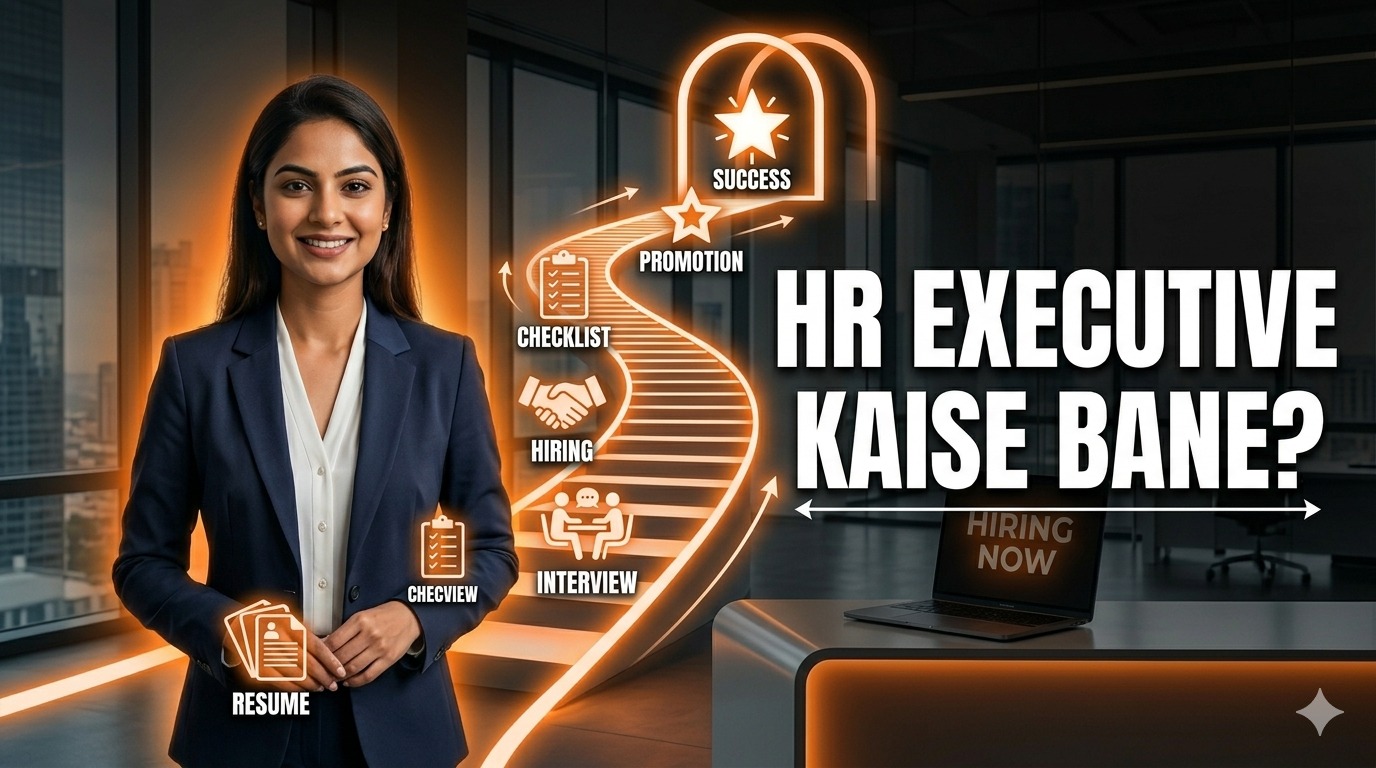
HR Job Kese Mile - Step by Step
Here is a practical roadmap that works.
Step 1 - Develop your communication and HR basics. Start by strengthening your spoken and written communication. Read about HR fundamentals - what is recruitment, what is onboarding, what is payroll, how do performance reviews work. Free articles, YouTube videos and basic HR courses on Coursera cover all of this well.
Step 2 - Do an internship. This is the single most important step for freshers. Even a one-month internship at a small company's HR department gives you real experience. You will learn how to screen resumes, coordinate interviews, maintain employee records and handle basic HR queries. That experience on your resume changes everything.
Step 3 - Build a strong HR-focused resume. Your resume should highlight your communication abilities, any HR or people-management experience you have, software you know and a brief, clear objective statement. Keep it one page for freshers, two pages maximum for experienced candidates.
Step 4 - Apply on job portals consistently. Search for HR executive, HR recruiter or HR intern roles on job portals every single day. Apply to roles that match your current experience level and write a personalised one-liner in your application when possible. Consistency over a period of three to four weeks almost always produces interview calls.
Step 5 - Prepare for HR interviews seriously. HR interviews test your communication more than anything else. Common questions include - tell me about yourself, why do you want to work in HR, how would you handle a difficult employee situation, describe your experience with recruitment. Prepare clear genuine answers. Do not memorise scripts - practice speaking naturally about your actual experiences and motivations.
Tips for Freshers
- Start with an internship rather than holding out for a full-time role immediately because it proves more pressurable for you. The experience you gain in two or three months of real HR work will make every future interview significantly easier.
- Work on your communication every day. Read articles, watch professional content, practice speaking clearly about ideas. Communication is your primary tool in HR, and it improves with deliberate practice.
- Keep your HR fundamentals clear. Know the difference between recruitment and selection. Understand what onboarding involves. Know what terms like CTC, gross salary and PF mean. These basics come up in interviews constantly.
- Build genuine confidence not just surface-level polish. HR managers can tell the difference between someone who has rehearsed well and someone who actually enjoys working with people. Be authentic about your interest in the field.
Tips for Experienced Candidates
- Invest time in learning HRMS software. Tools like Keka, Zoho People, Darwinbox and GreytHR are widely used across Indian companies. Being familiar with even one of them adds real value to your profile.
- Leadership development becomes important as you move toward managerial roles. Start taking on responsibilities beyond your defined scope - mentor junior HR team members, lead a recruitment drive, design an onboarding checklist. These experiences matter when you are going for senior positions.
- Understand recruitment strategy beyond just sourcing candidates. Learn about employer branding, talent pipeline building and how to reduce time-to-hire. These strategic concepts separate mid-level HR professionals from those ready for management.
- If you have handled complex employee relations cases conflicts, disciplinary actions, grievance resolutions - document these experiences carefully. They are exactly what senior HR roles ask about in interviews.
Common Mistakes to Avoid
- Weak communication is the most disadvantageous thing in an HR interview. If you cannot communicate clearly and warmly in an interview for a role that requires constant communication the interviewer has no reason to believe you can do the job. Practice until it feels natural.
- Generic resumes are a waste of a good application. Sending the exact same resume to every company without tailoring anything shows a lack of effort. Always Tailor your resume according to the company's need and preference. Spend two minutes adjusting your objective statement and highlighting the most relevant experience for each specific role.
- Skipping interview preparation is a mistake that shows up immediately, pre-preparation is necessary. HR interviews ask about situational judgment - how you would handle specific scenarios and conditions. If you have not thought through these situations beforehand your answers will be vague and unconvincing.
- Not updating your skills is a career growth problem. HR is evolving - new tools, new compliance requirements, new approaches to employee engagement. Someone who learned HR basics four years ago and has not grown since will fall behind. Keep learning, keep adding to your toolkit.
Final Thoughts
HR is one of those careers that is easy to underestimate from the outside but deeply rewarding once you are in it. You are not just filling positions or processing salaries - you are shaping the environment where hundreds of people spend most of their waking hours. That is meaningful work.
The path into HR is accessible. You do not need an elite degree or years of experience to start. You need communication skills, genuine interest in people, a willingness to learn and the consistency to keep applying and improving.
Jaipur's job market for HR professionals is real and growing. Start today, build your skills, complete an internship if you can and approach your job search with consistency.
Your first HR role is closer than you think.
Looking for HR jobs across India? Check out Jobipo for the latest openings - no charges, direct hiring and fast selection.



Comments